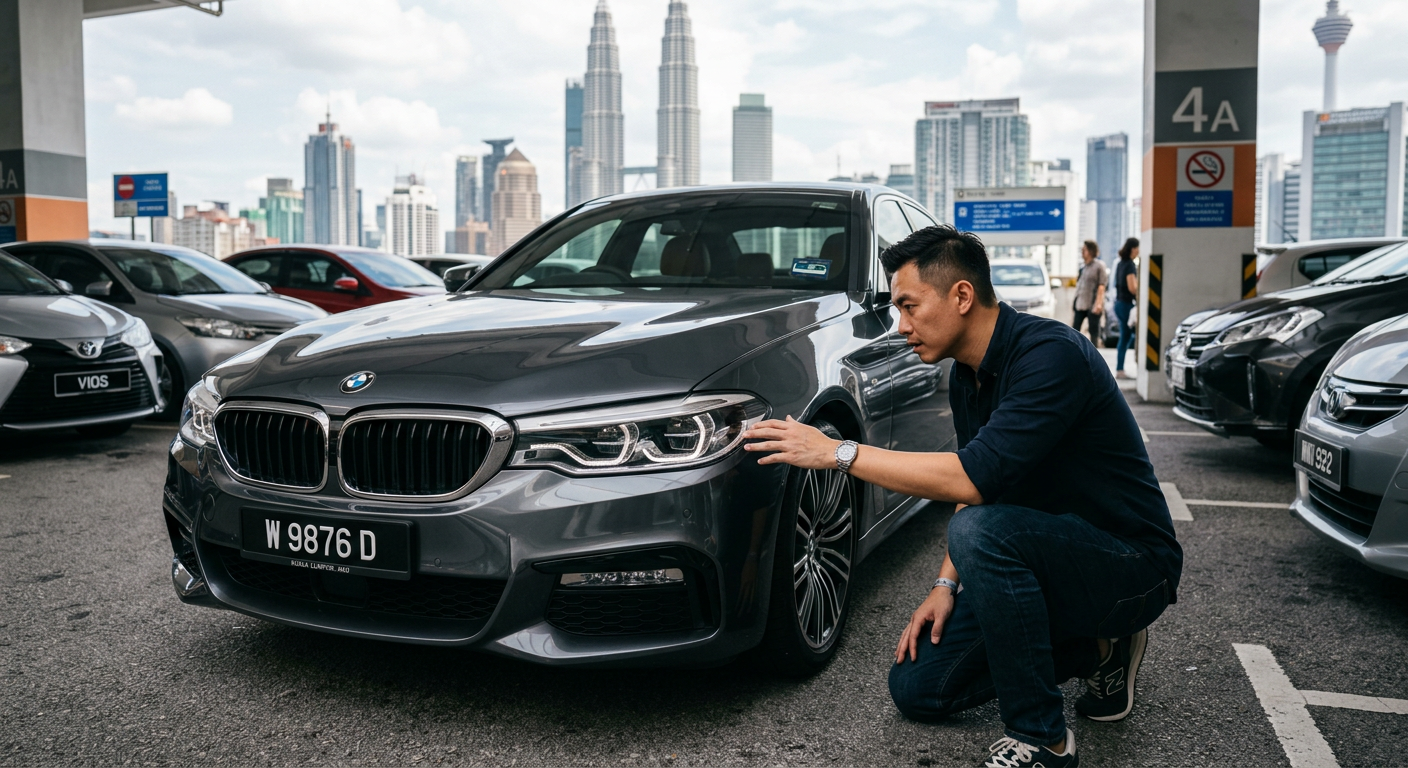
Who they are
Car enthusiasts in Malaysia are not defined by what they buy — they are defined by how they think. They are a Millennial-male, urban-dwelling cohort with strong views on travel, environment, and the country’s direction. They are politically engaged, socially conscious, and broadly curious about the world beyond their immediate environment.
45% are Millennials, which puts them in their late 20s to early 40s — peak earning years, active family formation, and high consumer ambition. 72% are male, which is the second-highest male share of any segment after esports fans.
Income is concentrated in the middle bracket at 37%, which is the largest share of any segment in the middle income tier. They are not a high-income luxury segment, nor are they budget-constrained. They have disposable income and they use it.
Educationally they are above average: 46% have a bachelor’s degree or above, with a notable 16% in technical or vocational education — suggesting practical skills alongside academic qualifications.
Geographically they are spread across all community types, urban and rural, with a slight concentration in larger cities. They are a nationally representative segment geographically.
What they care about
New in 2025-2026: EVs are entering the consideration set. The Malaysian automotive market saw EV and hybrid registrations grow 62% year-on-year in 2024 (MAA data). Among car enthusiasts specifically, 38% express interest in an EV or plug-in hybrid for their next purchase cycle. This is not mainstream adoption yet, but it signals a shift in what this segment is thinking about — and it opens a window for automotive brands, charging infrastructure providers, and sustainability-positioned services to engage this audience on their own terms.
Career advancement is the top life value at 56% — above average and consistent with a cohort in its prime earning and building years. Having a good time scores 44%, safety and security 55%, and making own decisions 48%. They are ambitious but not reckless.
Their top interests reflect a practical, mobility-oriented lifestyle. Vehicles and mobility leads at 64%, science and technology at 61%, and travel at 60%. They are interested in how things work and how they move. Movies and music at 53%, health and fitness at 37%, and food and dining at 43% round out a broad set of interests.
Travel is a defining passion. 66% want to experience something unique during their travels. 77% say sustainability is important when traveling. They are not mass tourists — they want meaningful, responsible travel experiences. This shapes what kinds of brands, destinations, and services they respond to.
On national concerns, poverty leads at 76%, followed by crime at 74% and health and social security at 70%. They are politically engaged and socially aware. Unemployment at 57% and the economic situation at 67% show a cohort that is concerned about the country’s direction and its most vulnerable people.
41% have right-leaning political views — consistent with their individualist orientation and their interest in personal achievement.
Where to reach them
The channels that work
Radio is the standout traditional channel: 81% listen weekly, compared to a 56% average. This is the highest radio consumption of any segment in the study. Drive-time radio, in particular, reaches car enthusiasts during their peak driving hours.
Magazines are equally powerful: 86% read magazines weekly, compared to a 42% average. Editorial content, automotive publications, travel magazines, and lifestyle magazines all reach this segment at unusually high rates.
Editorial websites and apps are the top digital channel at 70% ad recall — the highest of any segment. They read online journalism, they follow opinion, and they act on what they read in editorial environments. If your brand has a credible editorial presence or a content partnership with an online publication, this is the segment most likely to encounter and act on it.
Music portals (62%), social media (54%), and video streaming services (50%) round out a broadly engaged digital media diet.
The channels that underperform
There are no dramatic vetoes for car enthusiasts. They are broad media consumers across both traditional and digital channels. However, video games at 32% is slightly below average, suggesting gaming environments are not a primary channel even though many own consoles.
Device reality
Smartphone is universal at 95%. Smart TV is the distinguishing device: 69% access the internet via smart TV, which is well above average and aligns with their heavy TV and video consumption. Desktop PC at 76% is also very high, suggesting professional and informational use alongside entertainment.
Tablet at 47% is average, and gaming console at 27% is below average — notably lower than other gaming-interested segments.
What to do
Editorial and content marketing is your most powerful channel for reaching car enthusiasts. 70% ad recall on editorial websites is exceptional. If your brand produces credible long-form content, opinion pieces, or investigative features, car enthusiasts are the segment most likely to read and act on it. Consider editorial partnerships, native content placements, and thought leadership programmes.
Radio is an undervalued channel for this segment. 81% weekly radio consumption — the highest of any segment — means audio advertising, podcast sponsorships, and drive-time radio spots are effective ways to reach car enthusiasts during their commute and leisure hours.
Sustainability and experience positioning will resonate strongly. 66% want unique travel experiences and 77% prioritise sustainability when traveling. If your brand is in travel, hospitality, automotive, or lifestyle, messaging that speaks to meaningful, responsible experience will outperform generic promotional appeals.
Print and publications still work for this segment. 86% read magazines weekly. If your brand has a print component — a magazine partnership, a publication, a printed guide — car enthusiasts will actually read it. This is not true of any other younger male segment.
What not to do
Do not assume car enthusiasts are only interested in cars. Their vehicle interest is real, but their media diet, their travel habits, and their national concerns are broad. They are consumers with wide-ranging interests, not a niche automotive subculture.
Do not ignore the female car enthusiast minority. 28% of car enthusiasts are female. They share many of the same attitudes — sustainability in travel, editorial consumption, radio listening — but may engage differently with automotive-specific content.
Do not use generic youth marketing. Car enthusiasts are mature Millennials, not younger Gen Z. They respond to substance, credibility, and editorial quality. Flashy, trend-chasing creative will not land the way it does with younger audiences.
Do not neglect the middle-income reality. 37% medium income does not mean premium pricing is off the table — these are active consumers with disposable income. But it does mean value messaging and financing options are as relevant as luxury positioning.