Who they are
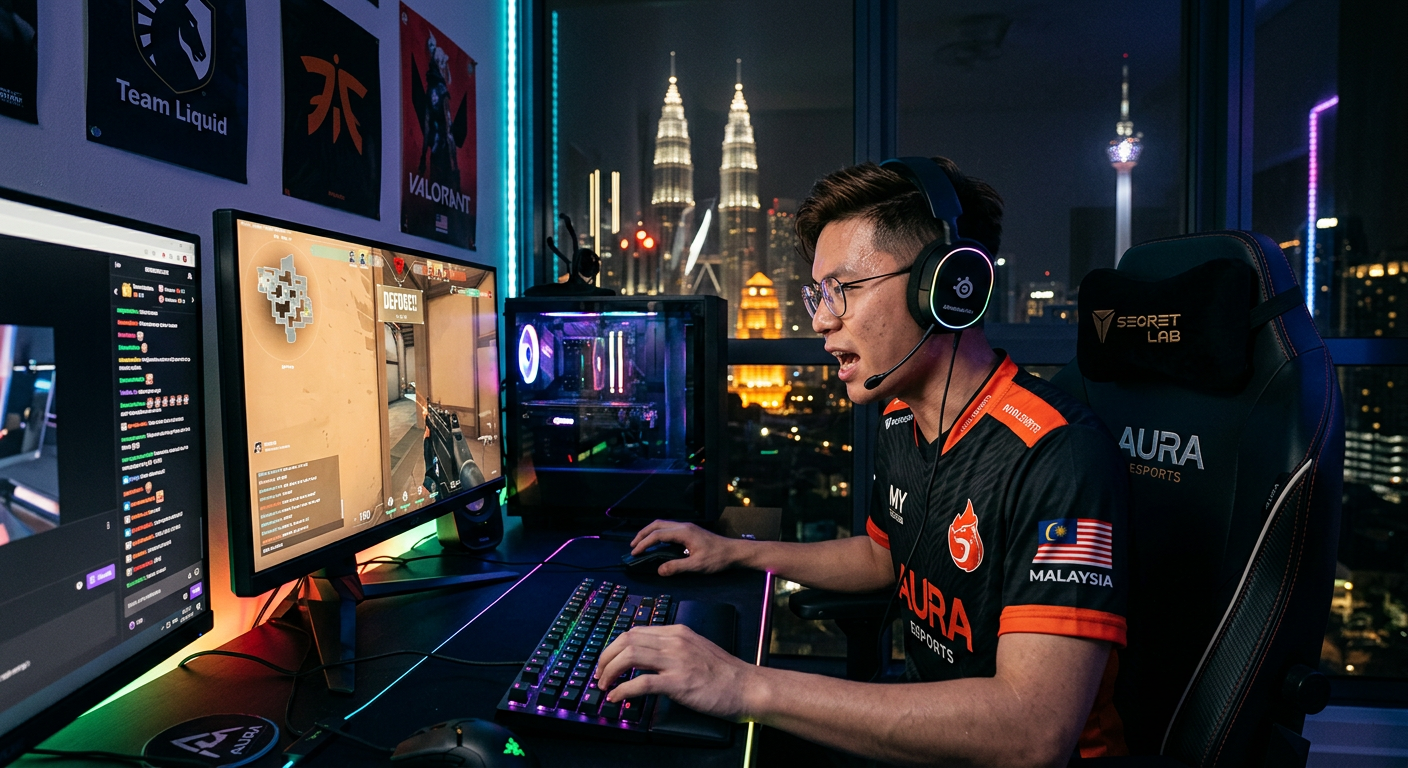
Esports and gaming fans are the most male-dominated and one of the youngest segments in the study. They are not casual gamers — this is a segment defined by a consuming interest in gaming culture, esports content, and digital entertainment that extends across every waking hour of their digital lives.
43% are Generation Z — the highest share of any segment. Another 31% are Millennials. They are young, they are digital-native, and they approach media, commerce, and brand interaction differently from older consumers.
72% are male, which makes this the most heavily male-skewing segment in the study. The 28% female minority is significant but often overlooked — gaming brands that ignore female fans miss a quarter of the audience.
They are highly educated: 58% have a college degree or above. Income is spread evenly across all brackets, which means this is not a budget or premium segment — it is a cross-section of young Malaysian society.
Geographically they are urban. 39% live in large cities and 23% in medium-sized towns, which means they are concentrated in urban centres where gaming culture, esports events, and digital infrastructure are most accessible.
What they care about
Career and success dominate their life values. Being successful scores 54% and career advancement 55% — both above average and consistent with a cohort that is still building its professional identity. A happy relationship comes third at 48%. They are ambitious and they know it.
Their media interests are defined by digital entertainment. 74% are interested in movies, TV, and music. Gaming and esports scores 100% by definition. Science and technology at 69%, sports at 56%, and finance and economy at 52% round out an interests profile that is culturally engaged, digitally oriented, and commercially aware.
Their attitudes toward digital content reveal a pragmatic, cost-conscious approach to media. 64% prefer digital content because it is easier to manage. 62% say digital services help them discover new and exciting content. But 48% use free alternative websites and apps to access paid content, and the same proportion say streaming services are too expensive. They want premium content but they work around the paywall.
On national concerns, unemployment leads at 72%, followed by poverty at 69% and inflation at 52%. This is a generation that is entering or concerned about entering the workforce in a difficult economic environment. Their cost-of-living anxiety is real and acute.
40% have right-leaning political views — notably higher than average, which aligns with their individualism and self-reliance orientation.
Where to reach them
The channels that work
Video games are the defining advertising channel. 74% remember seeing ads in video games — the highest score of any channel measured for this segment, and far above the average consumer. In-game advertising, gaming site sponsorships, esports event partnerships, and gaming creator integrations are the most effective ways to reach this segment in an environment where they are genuinely engaged.
Social media is the second-strongest channel at 62%. They follow companies (65%), like posts (55%), and comment on posts (46%) at above-average rates. Unlike passive younger segments, esports fans will actually interact with brand content if it speaks to their gaming identity.
Websites and apps of brands (62%) and video streaming services (62%) both perform strongly. They encounter brands in digital environments that feel native to their media habits.
On non-digital, printed magazines and journals are the standout at 54% recall — notably higher than average. Out-of-home advertising scores 49%. Cinema at 50% is also strong. They are reachable in physical spaces, particularly entertainment and lifestyle venues.
The channels that underperform
Daily newspapers at 15% and weekly newspapers at 13% are clear vetoes. This is the lowest print readership of any segment in the study.
Device reality
Gaming consoles are the defining device: 77% use one to access the internet, compared to the 27% average. This is the highest gaming console ownership of any segment. Smartphones are universal at 96%, and desktop PC at 77% is also very high. They access the internet across all devices, but the console is the signal that separates esports fans from the general gaming population.
What to do
In-game advertising is not optional for reaching this segment — it is the primary channel. 74% ad recall in video games is exceptional. If you are not running in-game placements, gaming site sponsorships, or esports event partnerships, you are not reaching this segment where they live. This is the equivalent of TV for an older generation.
Gaming-native creators will outperform traditional influencers. They follow esports personalities, gaming streamers, and gaming culture accounts on social media. A partnership with a gaming creator who genuinely uses your product will outperform a mega-influencer or celebrity deal for this segment.
Gaming-adjacent products should consider esports sponsorship. 72% male, urban, digitally engaged, socially connected — this is exactly the audience that esports events and gaming culture venues reach. If your brand has a plausible connection to gaming or digital culture, event sponsorship is a viable path.
Free tiers and free trials are not optional. 48% use free alternatives to paid content because they find streaming services too expensive. Your product’s free tier is how you get initial uptake in this segment.
What not to do
Do not use TV or print to reach esports fans. Daily newspapers (15%) and weekly newspapers (13%) are the lowest of any segment. TV advertising at 44% is below average. These channels are dead for this cohort.
Do not assume the female minority is not interested in gaming. 28% of esports fans are female. Gaming culture brands that speak only to male audiences miss a significant and growing share of the segment.
Do not treat all esports fans as hardcore gamers. Gaming interests span casual to competitive. Your brand positioning should understand where on that spectrum your audience sits before choosing creative formats.
Do not ignore the economic anxiety underneath this segment. 72% cite unemployment as a top national concern. Cost consciousness is real. Pricing strategy matters even for digital products.