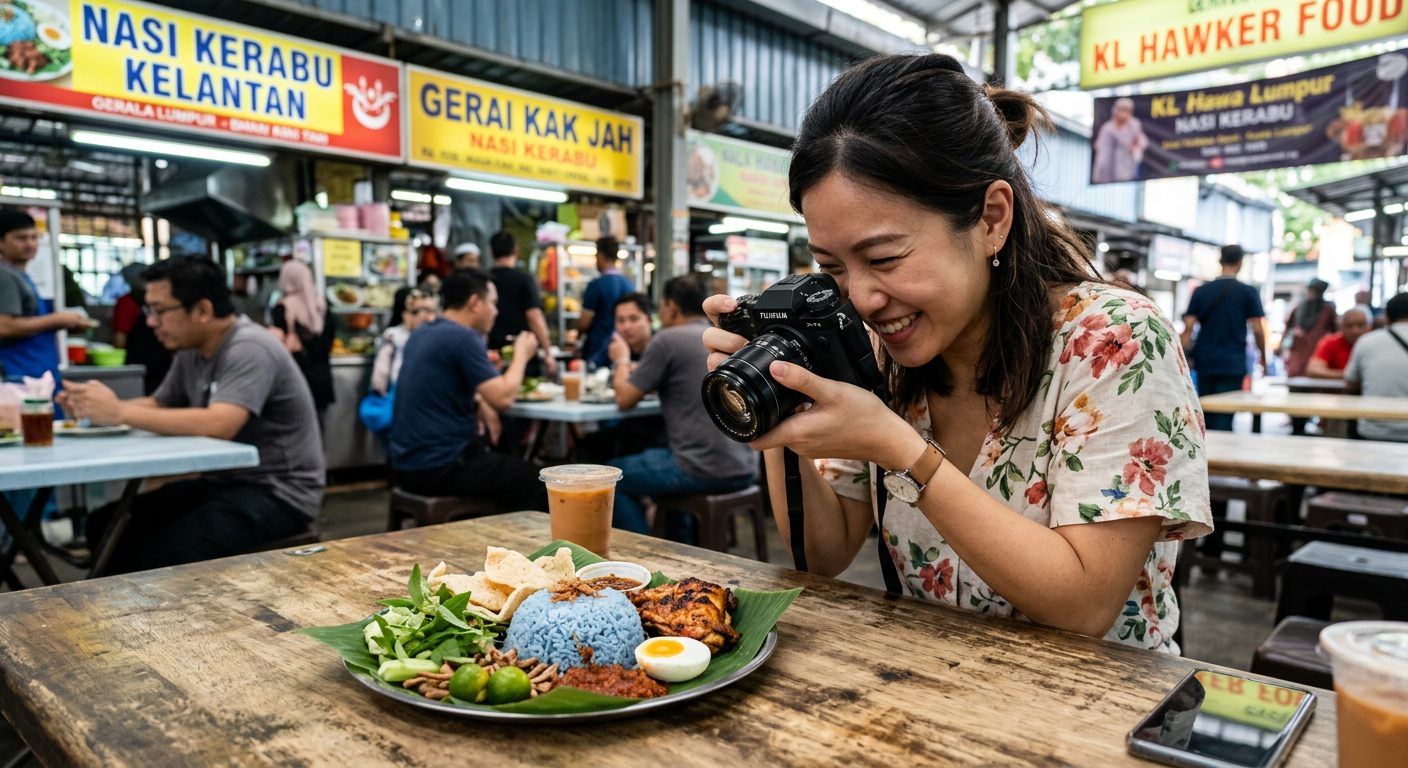
Who they are
Foodies and gourmets in Malaysia are the most educated consumer segment in the study: 48% hold a bachelor’s degree or above. That is the highest proportion of any segment measured. Education correlates with a certain relationship to information — this is a group that reads labels, that researches ingredients, and that holds brands to account for what they put in their products. Any brand that treats this segment as a passive audience will find its positioning challenged.
They skew Gen X at 25% and female at 54%, but the most important demographic characteristic is the income spread. This segment is represented across all income brackets. There is no concentration at the premium end or the budget end. This means the foodies and gourmets segment is not exclusively a luxury market — it is a quality market, and quality is defined differently depending on income level. A consumer earning RM5,000 a month and a consumer earning RM20,000 a month can both be foodies, but they express that identity differently in their purchasing.
They are intensely interested in what goes into their bodies. 53% actively avoid artificial flavours and preservatives, the highest proportion of any segment studied. 73% try to eat healthy most of the time. These are not casual preferences — they are operating principles that shape purchase decisions across every food and beverage category. For brands, the implication is straightforward: if your product contains artificial ingredients and you are marketing to this segment, the label will be read and the ingredient will be noted.
Cooking and baking is a significantly more popular hobby for this group than for the average consumer. This matters for how they evaluate food products. They are not just eating — they are preparing, experimenting, and comparing. Their baseline of culinary knowledge is higher, which means generic food marketing does not persuade them. They understand the difference between a premium ingredient and a mass-market substitute, and they will pay more for the former but only when that premium is demonstrable.
Food and travel are closely linked for this segment. 68% have travel as a hobby. When they travel, food is part of the experience — they seek out local food, they plan meals around destinations, and they treat cuisine as a reason to visit a place rather than an afterthought. This has direct implications for food tourism, restaurant positioning, and any brand that can frame itself as part of an food experience rather than a commodity.
What they care about
The most distinguishing characteristic of this segment is the combination of high quality-seeking and high price-sensitivity. 72% cite rising prices and inflation as a national priority, the highest proportion of any segment studied. At the same time, they are willing to pay premiums for genuine quality. The tension between these two facts is the central challenge for brands targeting this group.
The resolution of that tension is information. They are the segment most likely to research a product before purchasing it. They read labels, they check ingredient lists, they look for certifications. When they pay a premium, they want to understand what they are paying for. The brands that win with this segment are the ones that give them something to pay for — a story about sourcing, a certification, a demonstrable difference in production method.
Convenience is also non-negotiable, at 68%. This is a segment that cares deeply about food quality but lives within real time constraints. They want food that is both excellent and fast. The brands that solve the quality-plus-convenience equation — meal kits, premium ready meals, well-sourced convenience foods — are directly addressing a stated need of this group. Convenience does not reduce quality in their minds; it is a baseline expectation alongside quality.
On national priorities, rising prices and inflation lead at 72%. This is consistent with the quality-seeking, price-aware profile. They are watching what they spend. However, it is worth noting that this segment does not default to the cheapest option — they spend carefully, which means they look for the best value rather than the lowest price. A brand that communicates genuine quality and justifies its price will earn a place in this consumer’s basket in a way that a discount-led brand never will.
Where to reach them
The channels that actually work
Video portals are the strongest digital advertising channel for this segment at 62% ad recall. This is a higher figure than for most other segments and it reflects the informational orientation of this group. They go to YouTube and similar platforms to research — to watch recipe videos, ingredient explainers, and product comparisons. If your brand has a presence in this content environment and it is authentically educational, it will be more effective than display advertising in other contexts.
In-store advertising is the strongest non-digital touchpoint at 49% recall. This is a segment that shops in physical stores, that responds to shelf presence, point-of-sale messaging, and in-store tastings. They are buying food, and food shopping for this group is partly an experiential activity. A brand that is absent from the physical retail environment — that exists only online — is missing a significant touchpoint. The in-store environment is where they confirm choices they may have made online and discover products they were not actively seeking.
Social media plays a supporting role. They interact with brands on social media more than average consumers, but less actively than pet lovers. The interaction pattern here is more informational than social — they follow brands to stay informed about new products, seasonal offerings, and content. The social media presence that works for this segment is one that provides value through information, not through entertainment or community alone.
The channels that underperform
Brand websites underperform average for ad recall with this segment, which aligns with the broader pattern: they encounter brands in the video and in-store environments rather than through direct brand visits. Brand websites function as purchase and information destinations, but they are not a primary awareness or discovery channel.
Podcast and radio advertising is likely to underperform for this segment unless the programme content is directly relevant to food or travel. This is a discerning media consumer, and generic audio placements will not generate the connection that video or in-store environments produce.
Device reality
Smartphone penetration is effectively universal for this segment, which means mobile is a given. The more relevant device insight is the combination of smart TV and smartphone, which positions this group well for connected TV advertising. Video content consumed on the big screen — food programming, travel content, documentary formats — is a natural fit for this segment and a channel where food and beverage brands can command attention in an environment that is conducive to quality messaging.
What to do
Lead with clean ingredients and make your sourcing story explicit. 53% actively avoid artificial flavours and preservatives, and 73% try to eat healthy. These are not decorative claims on packaging — they are the primary purchase criteria for this segment. If your product is genuinely free from artificial ingredients, say so clearly and specifically. If your sourcing is demonstrably superior, tell that story on the label, on your website, and in your content. This segment will verify the claim, and the verification is part of building trust.
Solve the quality-plus-convenience problem. 68% want food that is both high quality and convenient. The brands that capture this segment are the ones that do not force a trade-off. Premium ready meals, meal kits with high-quality ingredients, clean-label convenience foods — all of these respond directly to a stated need. A brand that positions purely on quality without addressing convenience will leave this segment with a barrier to purchase, even if the product is excellent.
Invest in video content as an advertising and discovery channel. Video portals at 62% ad recall are the strongest digital channel for this segment. This means branded video content — recipe collaborations, ingredient explainers, farm-to-table narratives — will perform better with this group than standard display or social placements. The content should be informative and honest, not promotional. This segment can identify advertising dressed as content quickly, and the reaction is negative.
Use in-store environments deliberately. 49% recall in-store advertising. This is not an accident of passive exposure — it reflects a segment that shops physically, that responds to point-of-sale communication, and that uses the store as a discovery environment. Premium shelf placement, well-designed packaging, in-store tastings, and shelf-edge information all contribute to conversion with this group.
Price carefully and justify every premium. 72% are focused on rising prices and inflation. This does not mean they will not pay more. It means they need a reason to. If your product commands a price premium over a competitor, that premium must be visible and verifiable. A vague claim of superior quality without substance will not survive this segment’s evaluation.
What not to do
Do not use artificial ingredients and market to this segment anyway. 53% actively avoid artificial flavours and preservatives. This is the most health-conscious segment in the study. If your product contains artificial ingredients, a different segment is your market.
Do not lead with price promotions. This segment is price-aware, yes, but discount-led marketing signals a different product tier. A brand that is constantly running promotions in front of this audience will be categorised as a budget brand, regardless of its actual quality. Price communication should focus on value and justification, not on discounts.
Do not make vague quality claims. “Premium” and ” artisan” and ” finest” are words that this segment has learned to distrust precisely because they are applied indiscriminately. Every quality claim must have a specific basis — a sourcing origin, a production method, a certification. The 48% with a bachelor’s degree are the same people who will look for that basis.
Do not assume your brand website is doing the work. Brand websites underperform average for ad recall with this segment. They may visit your site to research a product they discovered elsewhere, but they will not discover your brand through your website. Your discovery channels are video content, in-store presence, and earned mentions from trusted sources.