Who they are
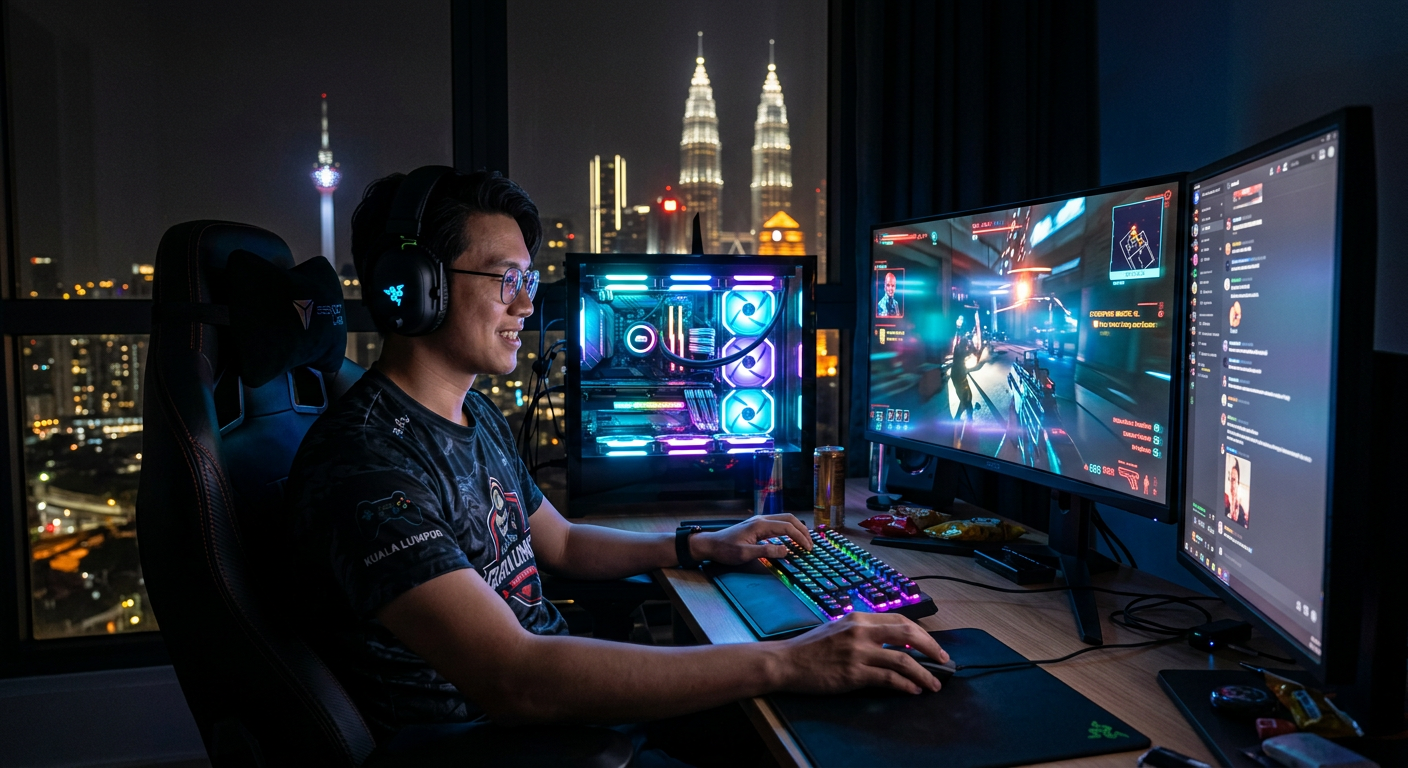
Heavy gamers in Malaysia are the most committed gaming segment — those who play 10 or more hours per week. They are not casual players; they are deeply embedded in gaming culture, deeply digitally engaged, and deeply interested in gaming as both a hobby and an identity. They are the audience that gaming brands, esports organisations, and gaming-adjacent brands need to understand.
40% are Gen Z — the highest of any gaming segment and notably higher than other formats. They are the generation that grew up with gaming as a mainstream, normalised activity.
67% are male, 33% female. This is the most male-skewing of all gaming segments, even more than console or PC gamers. The female minority is significant but often underserved by gaming brands.
42% have high household income — the highest of any gaming segment. They have disposable income for gaming hardware, subscriptions, in-game purchases, and gaming lifestyle products.
36% live in households of two or more related adults. They are often in shared living situations where gaming is a social, communal activity.
45% live in cities with over 1 million inhabitants. They are concentrated in major urban centres where gaming culture, esports venues, and gaming retail are most developed.
What they care about
A happy relationship leads at 50% and learning new things at 47%. They are socially engaged gamers who value relationships and discovery alongside their gaming habit. Having a good time at 45% and making my own decisions at 49% show they are autonomous, experience-seeking consumers.
Gaming and esports leads their interests at 69% — by definition. Movies, TV shows, and music at 68% and food and dining at 56% show they are broadly culturally engaged beyond gaming.
Video gaming as a hobby scores 66% — by definition. This is a defining identity, not just a pastime.
61% state that digital services allow them to discover new and exciting content. They are digitally native consumers who use digital platforms for discovery and entertainment.
On national concerns, the economic situation leads at 72%, poverty at 71%, and crime at 70%. Housing at 54% is notably above average — they are concerned about property and housing costs, consistent with their urban concentration.
38% have right-leaning political views — consistent with their individualist, achievement-oriented orientation.
Where to reach them
The channels that work
Printed magazines are the standout traditional channel: heavy gamers remember seeing ads in printed magazines and journals more often than the average consumer. Gaming publications, tech magazines, and editorial outlets reach this print-engaged gaming audience.
Music portals and streaming services are the second-strongest channel: above-average ad recall on music platforms. They listen to music while gaming, and music streaming advertising reaches them during gaming sessions.
Social media is the third-strongest channel: they interact with companies on social media more than average. They follow gaming brands, esports teams, and gaming influencers.
They consume all types of media frequently — the most media-engaged of the gaming segments. TV, radio, video streaming, and digital music all perform above average.
The channels that underperform
Daily newspapers at 17% and weekly newspapers at 17% are below average. Print newspapers are not an effective channel for this segment.
Device reality
Smartphone at 95% is near-universal. Desktop PC at 72% and laptop at 70% are both well above average — reflecting a segment that uses high-performance computing for gaming.
Gaming console at 44% is above average.
What to do
Gaming publications and editorial advertising are uniquely effective. Strong printed magazine ad recall means gaming magazines, tech publications, and editorial partnerships are effective channels that most brands overlook.
Music streaming advertising reaches this segment during gaming sessions. Above-average music platform ad recall means audio advertising on Spotify, YouTube Music, and similar platforms reaches this audience during their gaming hours.
Esports and gaming creator partnerships will outperform traditional influencers. They follow esports personalities and gaming creators. A gaming creator partnership will outperform a mainstream celebrity or mega-influencer for this segment.
Gaming lifestyle and hardware brands have a natural audience. High income and gaming as identity mean premium gaming hardware, peripherals, and lifestyle products are viable for this segment.
What not to do
Do not ignore the female minority. 33% female heavy gamers represent a significant audience for female-focused gaming products, gaming communities, and gaming brands looking to expand beyond male audiences.
Do not assume heavy gamers are all young. 40% Gen Z means 60% are not Gen Z. Older heavy gamers may have different gaming preferences, purchasing power, and brand relationships.
Do not invest in printed newspapers. 17% daily newspaper readership is below average and not effective for this digitally native segment.