Who they are
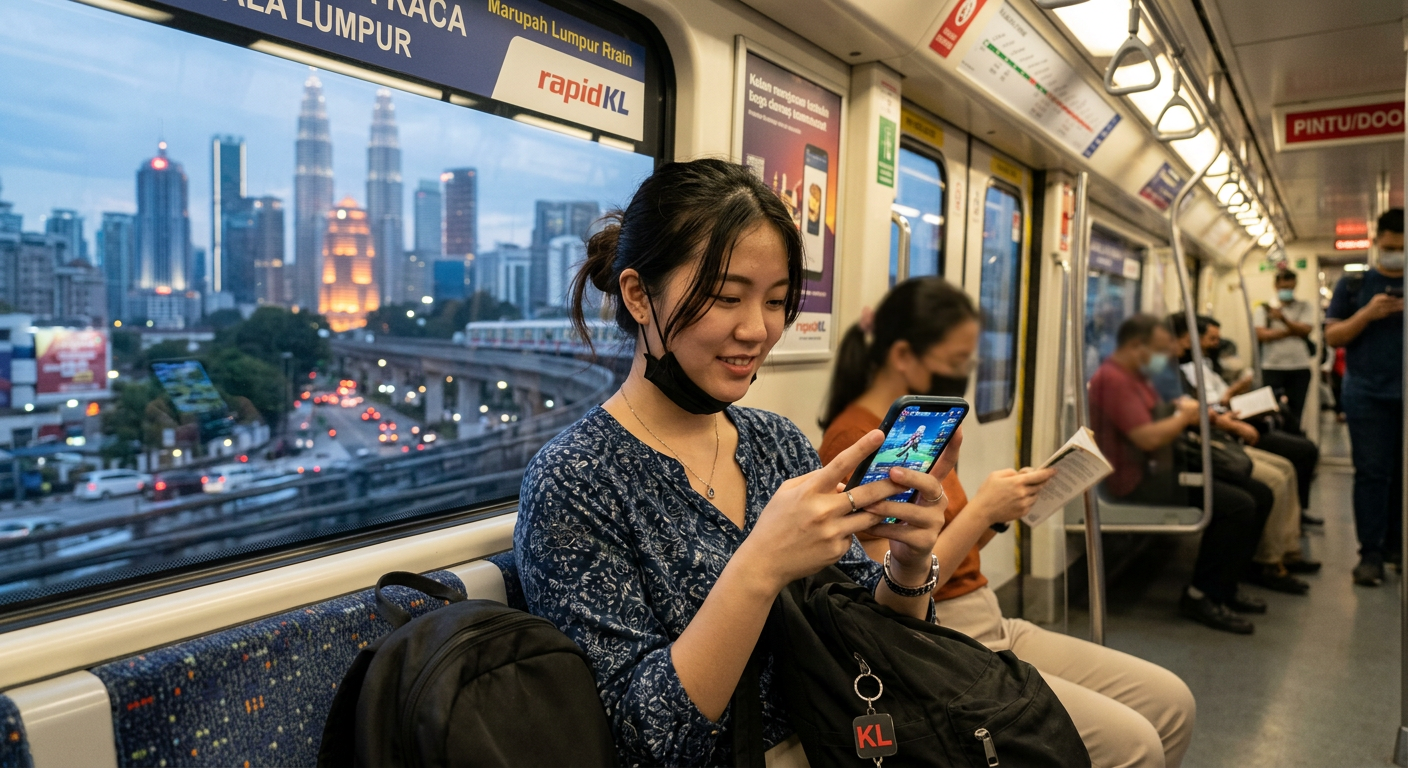
Mobile smartphone gamers in Malaysia are the largest gaming segment by far — a broad cross-section of Malaysian consumers who game primarily on their smartphones. They are not a niche subculture; they are the mainstream of Malaysian gaming. They are young, gender-balanced, and representative of all income brackets and geographic types.
33% are Gen Z — the highest of any gaming segment. Another 31% are Millennials. They are young consumers for whom mobile gaming is the default gaming format.
56% are male, 44% female. This is the most gender-balanced of the gaming segments, with a significantly higher female share than PC, console, or heavy gaming segments. Mobile gaming has achieved genuine gender balance that other gaming formats have not.
Income is evenly spread across all brackets: 34% high, 34% middle, 32% low. Mobile gaming’s accessibility means it reaches across the income spectrum in a way that console or PC gaming does not.
34% live in multi-generational family households. They are embedded in extended family environments, gaming on shared devices and family smartphones.
They live across all community types in proportions that mirror the national average. They are geographically representative of Malaysia as a whole.
What they care about
Being successful leads at 55% and an honest and respectable life at 49%. They are achievement-oriented consumers who see gaming as part of a modern, connected lifestyle.
Their interests are broad and entertainment-oriented. Movies, TV shows, and music leads at 67%, food and dining at 59%, and science and technology at 53%. They are culturally engaged consumers for whom gaming is one of many entertainment activities.
Video gaming as a hobby scores 48% and traveling scores 40%. This is a multi-hobby leisure profile where gaming is significant but not exclusive.
53% prefer digital content because it is easier to manage. They are pragmatic convenience-seekers who choose digital formats for practical reasons, not just preference.
On national concerns, rising prices, inflation, and cost of living lead — the defining anxiety of this young, often lower-income segment. The economic situation at 66% and unemployment at 64% are also top concerns. They are acutely cost-conscious.
34% have right-leaning political views — consistent with their individualist, self-reliant orientation.
Where to reach them
The channels that work
Out-of-home advertising is the standout channel: 53% out-of-home ad recall is the highest of any gaming segment. billboards, transit advertising, and outdoor media reach this mobile-native audience in physical space.
Search engines are the second-strongest channel: above-average ad recall on search engines. They actively search for products and brands, and paid search captures their consideration phase.
Social media is the third-strongest channel: they interact with companies on social media more than average. They follow brands, engage with content, and are reachable through social advertising.
They consume all types of media frequently — the most media-engaged of the gaming segments. TV, radio, video streaming, and digital music all perform above average.
The channels that underperform
Daily newspapers at 18% are below average. Print newspapers are not an effective channel for this digitally native segment.
Device reality
Smartphone at 99% is universal — by definition. Desktop PC at 56% and laptop at 61% are both slightly below average — reflecting a mobile-first digital user for whom the smartphone is the primary device.
What to do
Out-of-home advertising uniquely reaches this segment. 53% out-of-home ad recall is the highest of any gaming segment. If you are not using OOH, you are missing the most distinctive channel for reaching this audience.
Search engine marketing captures active shopping intent. Above-average search engine ad recall means paid search is effective for reaching this segment when they are actively shopping in your category.
Digital-first, mobile-optimised experiences are essential. 53% preferring digital for convenience means your mobile experience must be fast, frictionless, and optimised for on-the-go usage.
Cost-of-living messaging resonates with this price-sensitive segment. Rising prices and economic concerns are top national concerns. Value positioning, affordable pricing, and payment flexibility will resonate with this cost-conscious audience.
What not to do
Do not assume mobile gamers are a low-income segment. Evenly spread across income brackets means this is a mainstream consumer segment that spans all economic levels. Premium positioning is as viable as budget.
Do not ignore the female minority. 44% female mobile gamers represent a significant audience for mobile game developers, gaming accessories brands, and gaming-adjacent products.
Do not invest in printed newspapers. 18% daily newspaper readership is below average and not an effective channel for this digitally native segment.