Who they are
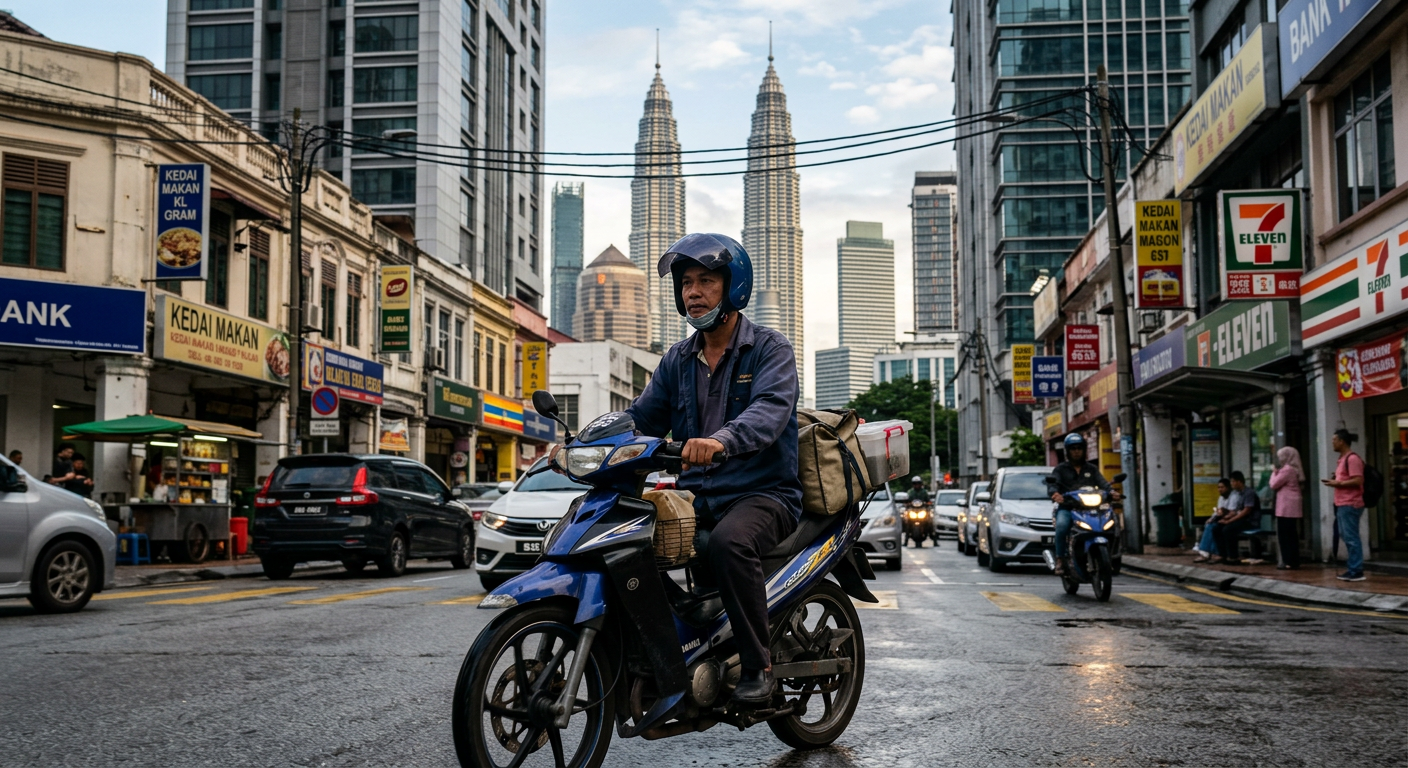
Motorcycle owners in Malaysia are the most representative vehicle-owning segment in the study — a broad cross-section of Malaysian consumers for whom the motorcycle is primary transport. They are younger, more geographically distributed, and more household-diverse than car owners. They are not a niche subculture; they are the mainstream vehicle owner in Malaysia.
45% are Millennials, which makes them the youngest vehicle-owning segment. Another 33% are Gen Z. This is a young vehicle-owning cohort that grew up with motorcycles as primary transport rather than a lifestyle accessory.
57% are male, 43% female. This is the most gender-balanced of the vehicle segments, with a notably higher female share than car enthusiasts or business travellers. Motorcycles serve as practical transport for all genders.
Income is concentrated in the middle: 38% medium income and 29% low income. They are not a high-income segment — motorcycles are primary transport for everyday commuters, not a premium lifestyle choice.
32% live in multi-generational family households — the highest of any vehicle segment. They are more likely to live in large, extended family households than any other vehicle-owning segment.
23% live in small towns — the highest of any vehicle segment. They are the most geographically distributed of the vehicle-owning segments, including significant representation in small towns and rural areas beyond the major cities.
What they care about
A happy relationship leads at 55%, followed by learning new things at 45% and having a good time at 44%. They are relationship-oriented, curious consumers who value experience alongside their practical transport choice.
Having a good time at 44% is notably below average — they are practical consumers who see motorcycles as transport rather than a lifestyle statement. This distinguishes them from car enthusiasts.
Their interests reflect practical mobility. Vehicles and mobility leads at 56%, travel at 56%, and food and dining at 53%. Science and technology at 49% and movies, TV, and music at 45% show broad cultural engagement.
Gardening and plants is their top hobby at 47% — notably high for a vehicle segment and suggesting a domestic, home-oriented leisure profile alongside their mobility habit. Traveling at 47% and reading at 42% round out a practical, home-and-travel leisure mix.
50% state they like to be in nature when traveling — the highest nature-orientation of any vehicle segment. They are outdoor-oriented consumers who use their mobility to access natural environments.
On national concerns, poverty leads at 70%, crime at 67%, and the economic situation at 66%. They are civic-minded consumers concerned about the country’s direction.
39% have right-leaning political views — consistent with their practical, self-reliant orientation.
Where to reach them
The channels that work
TV is the standout channel: motorcycle owners remember seeing ads on TV more often than the average consumer. Broadcast television advertising reaches this mainstream consumer segment effectively.
Apps are the second-strongest channel: above-average ad recall in apps. Mobile app advertising reaches this mobile-native segment effectively.
Social media is the third-strongest channel: they interact with companies on social media more than average. They follow brands, engage with content, and are reachable through social advertising.
They consume all types of media frequently — one of the most media-engaged of the vehicle segments. Radio, video streaming, and digital music all perform above average.
The channels that underperform
Daily newspapers at 18% and weekly newspapers at 17% are slightly below average. Print newspapers are not an effective channel for this segment.
Device reality
Smartphone at 96% is near-universal. Desktop PC at 57% and laptop at 61% are both slightly below average — reflecting a younger, more mobile-native digital user.
Gaming console at 29% is slightly below average.
What to do
TV advertising works for reaching this mainstream vehicle segment. Strong TV ad recall means broadcast television is an effective mass-reach channel for this geographically and demographically representative segment.
Mobile app advertising is effective for this mobile-native segment. Above-average app ad recall means mobile app advertising and in-app placements are efficient channels for reaching this smartphone-dominant audience.
Nature-based travel positioning resonates. 50% like to be in nature when traveling. Travel brands, outdoor brands, and tourism brands targeting motorcycle owners should emphasise nature, outdoor experiences, and scenic routes.
Automotive aftermarket brands have a natural audience. 56% interest in vehicles and mobility and their use of motorcycles as primary transport means automotive accessories, maintenance products, and motorcycle-specific brands have a receptive audience.
What not to do
Do not assume motorcycle owners are low-income budget consumers. 38% medium income means they have disposable income for quality products, accessories, and upgrades. Budget positioning may not resonate.
Do not treat motorcycle ownership as a lifestyle subculture. Gardening and plants as a top hobby at 47% shows this is a domestic, home-oriented segment. Lifestyle marketing should connect mobility to home and nature rather than speed or rebellion.
Do not ignore the female segment. 43% female ownership means female riders are a significant minority. Gear, accessories, and insurance products should account for female riders.