Who they are
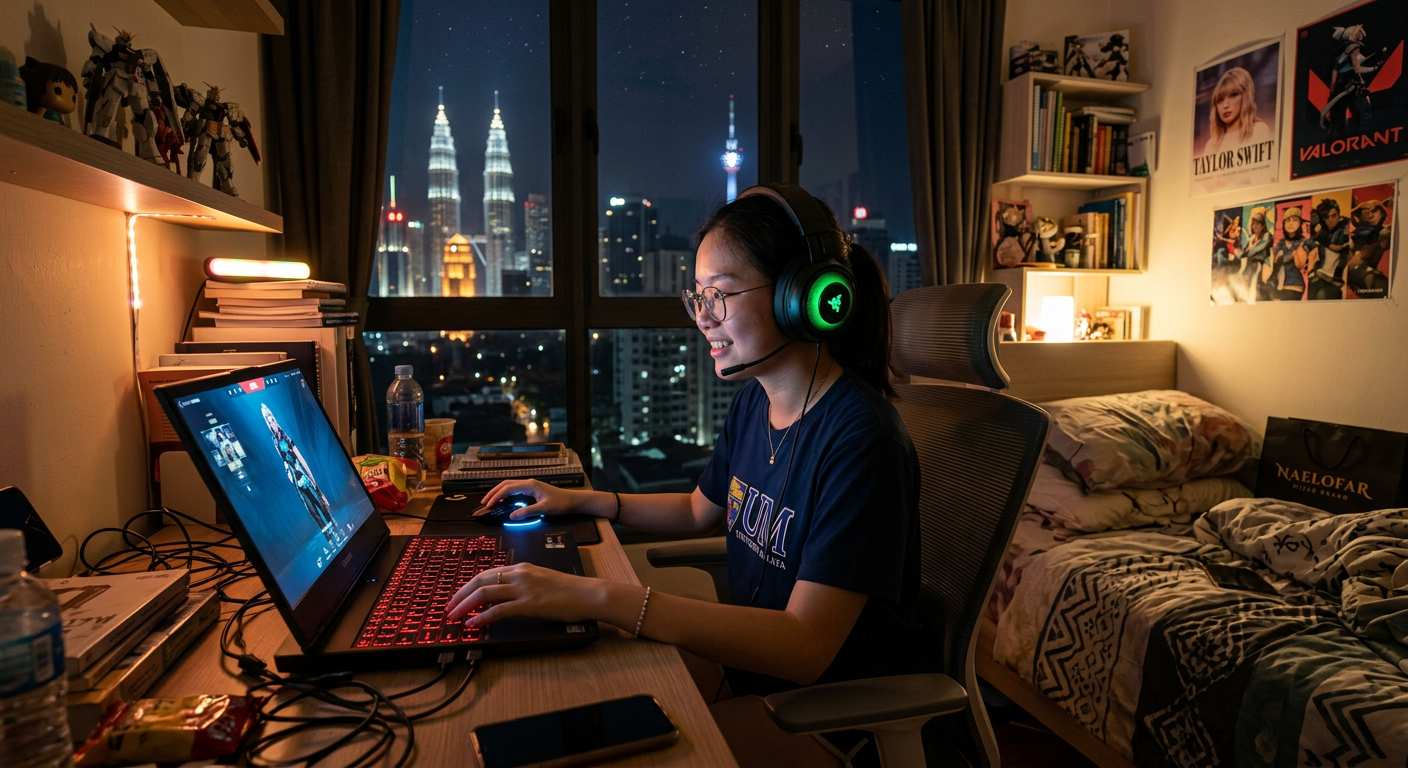
PC/laptop gamers in Malaysia are defined by their use of personal computers or laptops as a primary gaming device — a dedicated gaming format that sits between mobile gaming’s mass accessibility and console gaming’s dedicated hardware approach. They are young, gender-balanced, and disproportionately high-income. They are serious enough about gaming to use a PC or laptop but accessible enough that this is the second-largest gaming device segment after mobile.
37% are Gen Z and 31% Millennials. They are young consumers who grew up with PC gaming as a mainstream format, particularly for competitive and multiplayer gaming.
59% are male, 41% female. This is the most gender-balanced dedicated gaming segment, with a notably higher female share than heavy gamers or esports fans. PC gaming has achieved better gender balance than other dedicated gaming formats.
39% have high household income — the highest of any PC/laptop gaming segment. They have disposable income for gaming hardware upgrades, PC peripherals, gaming subscriptions, and in-game purchases.
33% live in households of two or more related adults. They are often in shared living situations where PC gaming is a communal activity.
39% live in cities with over 1 million inhabitants. They are concentrated in major urban centres where PC gaming culture, LAN cafes, and esports events are most developed.
What they care about
Being successful leads at 55% and safety and security at 52%. They are achievement-oriented consumers who see PC gaming as part of a successful, modern lifestyle. Making my own decisions at 47% shows they are autonomous.
Their interests are broad and lifestyle-oriented. Food and dining leads at 59%, movies, TV shows, and music at 63%, and science and technology at 53%. They are not narrow subculture consumers — they are broadly engaged young people who happen to game on PC.
Video gaming as a hobby scores 53% and tech and computers scores 51%. This is a segment that is hobbyist-level engaged with both gaming and technology.
60% prefer digital content because it is easier to manage. They are pragmatists who choose digital for convenience, consistent with their tech-forward orientation.
On national concerns, rising prices, inflation, and cost of living lead. The economic situation at 68% and unemployment at 65% are top concerns — they are acutely cost-conscious young consumers.
34% have right-leaning political views — consistent with their individualist, achievement-oriented orientation.
Where to reach them
The channels that work
In-store advertising is the standout channel: PC/laptop gamers remember seeing ads directly in stores more often than the average consumer. Retail environments, electronics stores, and point-of-sale reach this segment effectively.
Search engines are the second-strongest channel: above-average ad recall on search engines. They actively search for products, brands, and gaming information, and paid search captures their consideration phase.
Social media is the third-strongest channel: they interact with companies on social media more than average. They follow gaming brands, esports teams, and gaming influencers.
They consume all types of media frequently — one of the most media-engaged gaming segments. TV, radio, video streaming, and digital music all perform above average.
The channels that underperform
Daily newspapers at 17% and weekly newspapers at 17% are below average. Print newspapers are not an effective channel for this digitally native segment.
Device reality
Smartphone at 97% is universal. Desktop PC at 83% and laptop at 76% are both well above average — by definition, this is a segment with high PC and laptop ownership and usage.
Gaming console at 36% is average.
What to do
In-store and retail advertising work for this segment. Strong in-store ad recall means electronics retail, gaming stores, and point-of-sale are effective channels for reaching this PC gaming audience.
Search engine marketing captures active gaming intent. Above-average search engine ad recall means paid search for gaming products, hardware, and peripherals is effective for reaching this researching audience.
Tech and gaming hardware brands have a natural audience. PC gamers are hobbyist-level engaged with technology, making them a prime audience for tech products, PC components, peripherals, and gaming chairs.
Digital convenience positioning resonates. 60% preferring digital for convenience means digital-first services, cloud gaming, and downloadable content will resonate with this pragmatist audience.
What not to do
Do not assume PC gamers are hardcore or elitist. They are broadly engaged consumers with diverse interests beyond gaming. Lifestyle, food, entertainment, and career content all resonate with this audience.
Do not ignore the female segment. 41% female PC gamers represent a significant audience for female-oriented gaming products, gaming communities, and brands looking to diversify.
Do not invest in printed newspapers. 17% daily newspaper readership is below average and not effective for this digitally native segment.