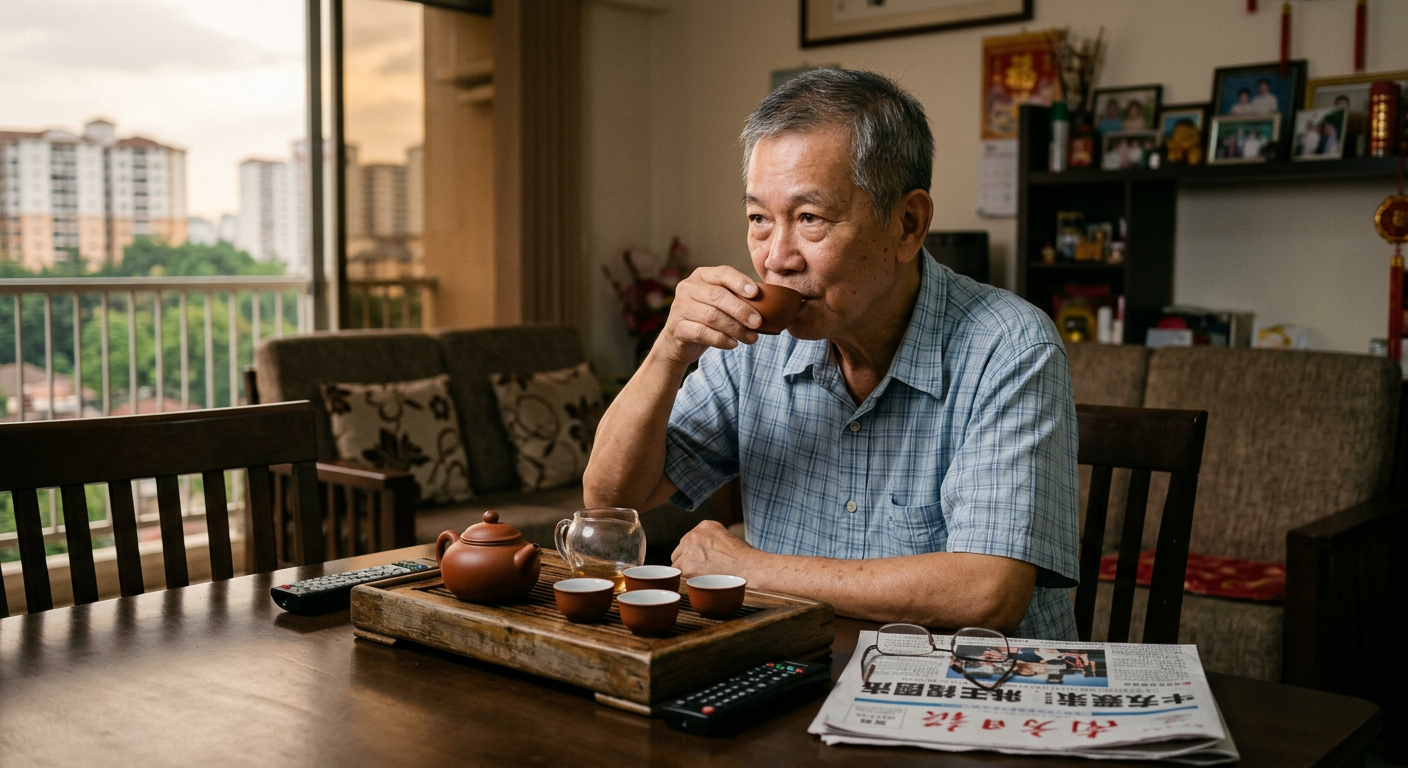
Who they are
Tea drinkers in Malaysia are the largest beverage segment in the study — a broadly representative consumer group that spans all ages, incomes, and geographic locations. They are not defined by the beverage so much as by the behaviour patterns that surround it: deal-seeking, health-conscious, and socially engaged.
32% are Gen Z and 31% are Millennials, which means 63% of tea drinkers are under 40. This is a younger-skewing segment despite tea being a traditional beverage. The youth skew reflects changing consumption patterns where younger Malaysians are active tea drinkers.
55% are male, 45% female — roughly gender-balanced with a slight male tilt. This is not a heavily gender-skewing segment.
Income is evenly spread across all brackets: 36% low, 33% middle, 33% high. There is no income profile that defines tea drinkers — they are everywhere.
Geographically they are distributed across all community types, more so than any other segment. They live in cities, towns, and rural areas in proportions that mirror the national distribution. They are the most geographically representative segment in the study.
32% live in nuclear family households, with couple households at 29% and multi-generational at 8%. Family structures mirror the national average.
What they care about
An honest and respectable life leads at 56%, followed by learning new things at 42% and safety and security at 28%. Having a good time scores 44% — notably above average for a traditional beverage category. Tea drinkers are not conservative or tradition-bound in their values.
Their interests are food and experience-oriented. Food and dining leads at 69%, travel at 59%, and movies, TV, and music at 57%. Science and technology at 53% and finance and economy at 56% show a commercially and culturally engaged audience.
Socializing is their top hobby at 48%, followed by video gaming at 47% and tech and computers at 39%. This is a social, digitally active cohort — not the retiring traditionalists that tea’s heritage might suggest.
On shopping behaviour, 79% look out for special offers when shopping — the highest deal-seeking score in the beverage category. 72% actively try to eat healthy and 47% avoid artificial flavours and preservatives. They are health-conscious shoppers who actively seek value.
47% find customer reviews helpful when shopping online — above average, showing they rely on social proof to inform purchasing decisions.
On national concerns, rising prices, inflation, and cost of living lead at 74% — the highest score of any segment for this concern. Poverty at 69% and crime at 66% are also top concerns. They are acutely cost-conscious.
They mirror the general political landscape without a strong skew — centrist with a slight left-leaning tendency.
Where to reach them
The channels that work
Search engines are the standout digital channel: tea drinkers remember seeing ads on search engines more often than the average consumer. Paid search campaigns are effective for reaching this deal-seeking segment actively shopping for products.
In-store advertising is the second-strongest channel: above-average ad recall directly in stores. Point-of-sale and retail environments reach this segment effectively, particularly for food and beverage categories.
Social media is the third-strongest channel: they interact with companies on social media more than average. They follow brands, engage with content, and are reachable through social advertising.
Digital music content is notably above average: they listen to digital music more than most consumers, which means audio advertising and music streaming platform ads reach them.
The channels that underperform
Daily newspapers at 17% and weekly newspapers at 17% are below average. Print newspapers are not an effective channel for this segment.
Device reality
Smartphone at 96% is near-universal. Desktop PC at 61% and laptop at 65% are both slightly above average. Gaming console at 33% is average.
What to do
Deal-seeking is the defining behaviour for tea drinkers. 79% look out for special offers. Your pricing strategy, promotions, and loyalty programmes are critical for capturing and retaining this segment. They are not brand-loyal in the traditional sense — they are deal-loyal.
Health positioning resonates with this segment. 72% actively try to eat healthy and 47% avoid artificial flavours. Food, beverage, health, and wellness brands should lead with health credentials and clean ingredients.
Customer reviews and social proof drive conversions. 47% find customer reviews helpful. Your product pages and e-commerce presence must include visible reviews, ratings, and user-generated content for this segment.
Search engine advertising works for this segment. Above-average search engine ad recall means paid search is an effective channel for reaching tea drinkers actively shopping in your category.
What not to do
Do not assume tea drinkers are traditional or old-fashioned. 32% Gen Z and their digital engagement, video gaming hobby, and social media activity show a modern, digitally active segment. Marketing that positions tea as a heritage-only beverage will not resonate with the youth skew.
Do not ignore the health-conscious majority. 72% actively trying to eat healthy is a strong signal. Health-washing or products with artificial ingredients will not convert this segment.
Do not price above the market for this segment. 79% deal-seeking means price sensitivity is real. While they are not exclusively budget consumers (income spread is even), they actively hunt for offers and promotions.